
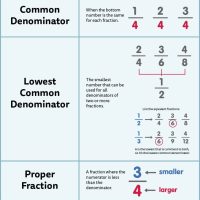
Kids start learning fractions as early as elementary school, typically around the age of 7 or 8. Understanding fractions is a crucial milestone in a child’s mathematical development, paving the way for more complex concepts in the future. By grasping the concept of fractions, children build a solid foundation for tackling various mathematical problems. Let’s delve deeper into the fascinating journey of when do kids learn fractions and how educators help them master this essential skill.

When Do Kids Learn Fractions: A Comprehensive Guide
Welcome, young mathematicians! Today, we are going to delve into the exciting world of fractions to find out when and how kids start to learn about these fascinating mathematical concepts. Fractions can seem tricky at first, but with a little practice and patience, you’ll soon be a fraction whiz! Let’s embark on this learning journey together.
The Basics of Fractions
Before we jump into when kids start learning about fractions, let’s make sure we understand what fractions are. A fraction is a way of representing a part of a whole. Just like you can split a pizza into slices, fractions help us divide things into smaller, more manageable pieces.
When we talk about fractions, we usually use two numbers separated by a line. The number on the top is called the numerator, and it tells us how many parts of the whole we have. The number on the bottom is called the denominator, and it tells us how many equal parts the whole is divided into.
Introducing Fractions in Early Elementary
For many young learners, fractions start making an appearance in early elementary school, typically around second or third grade. Teachers may introduce simple fractions like halves (1/2) and quarters (1/4) to help students grasp the concept of sharing equally.
One fun way to learn about fractions is through everyday objects. For example, you can cut a sandwich in half to show what half looks like or split a piece of fruit into quarters to understand quarters. These hands-on activities make fractions more concrete and easier to understand.
Building on Fraction Knowledge in Upper Elementary
As kids progress through upper elementary, usually around fourth or fifth grade, they delve deeper into the world of fractions. This is where things start to get a bit more challenging but also more exciting! Students begin to work with fractions beyond halves and quarters, exploring concepts like thirds, fifths, and eighths.
One common way to visualize fractions is by using a fraction bar. This tool helps students see how fractions compare to each other and how they relate to the whole. By shading in portions of the fraction bar, kids can develop a better understanding of fractions as parts of a whole.
Adding and Subtracting Fractions
Once students have a solid grasp of basic fractions, they can start learning how to add and subtract them. This is where things can get a bit tricky, but with practice, you’ll be a fraction pro in no time!
When adding fractions, it’s essential to make sure the denominators are the same. If they’re not, you’ll need to find a common denominator before you can add the fractions together. Subtraction follows a similar process, where you need to ensure the denominators match before you can subtract the fractions.
Multiplying and Dividing Fractions
After mastering addition and subtraction, students can move on to multiplying and dividing fractions. Multiplying fractions involves multiplying the numerators together and the denominators together. Dividing fractions is a bit more complex but follows a similar process to multiplying, with a few additional steps.
Remember, learning fractions is like solving a puzzle – each piece fits together to create a complete picture. So don’t be afraid to make mistakes and keep practicing until you feel confident with fractions!
Real-World Applications of Fractions
Understanding fractions isn’t just about solving math problems; it also has real-world applications that can be both fun and useful. From baking recipes that require you to measure ingredients in fractions to dividing up a pizza among friends, fractions are everywhere!
Next time you’re helping out in the kitchen or sharing snacks with your friends, think about how fractions play a role in these activities. You’ll be surprised at how often you use fractions without even realizing it!
Congratulations on completing our journey into the world of fractions! By now, you should have a solid understanding of when kids typically start learning fractions, the basics of fraction representation, and how fractions are used in everyday life. Remember, fractions may seem challenging at first, but with practice and perseverance, you’ll become a fraction master in no time!
Keep exploring the world of math, keep asking questions, and keep having fun with fractions. Who knows, maybe one day you’ll be teaching someone else all about fractions!
Fractions for Kids
Frequently Asked Questions
At what age do children typically start learning fractions?
Children usually start learning about fractions around the age of 7 or 8 in elementary school. This is when they develop a stronger understanding of numbers and basic math concepts, making it an appropriate time to introduce fractions.
How do teachers introduce fractions to young students?
Teachers use various hands-on activities, visual aids, and manipulatives to help students grasp the concept of fractions. These can include using fraction bars, pizzas, or even simple drawings to illustrate how fractions represent parts of a whole.
What are some common challenges children face when learning fractions?
Some common challenges children may face when learning fractions include understanding the concept of parts of a whole, differentiating between numerators and denominators, and grasping the idea of equivalent fractions. It may take time and practice for children to fully comprehend these concepts.
How can parents support their children in learning fractions at home?
Parents can support their children by incorporating fractions into everyday activities such as cooking, baking, or even sharing snacks. Encouraging children to see fractions in real-life situations helps reinforce their understanding and application of fractions in a practical way.
Are there any fun and interactive resources available to help children learn fractions?
Yes, there are many online games, apps, and books specifically designed to make learning fractions engaging and enjoyable for children. These resources offer interactive lessons and activities that can supplement classroom learning and provide additional practice in a fun way.
Final Thoughts
Children typically begin to learn fractions around the age of 7 or 8 when they develop a deeper understanding of parts and wholes. As they progress through elementary school, their understanding of fractions becomes more advanced. By the time they reach middle school, most kids have a solid grasp of basic fraction concepts. Overall, the process of learning fractions is gradual and builds upon foundational math skills. It is important for educators to provide hands-on experiences and real-life examples to help kids understand the concept better at an early age.